
Most people glance at their credit reports without truly understanding what a tradeline means for their score. Yet, knowing how tradelines work can reveal the key factors shaping your credit profile. From account age to payment history, this guide breaks down what is a tradeline and how primary versus authorized user tradelines impact your financial readiness. Ready to gain clear, practical insights? Let’s get started.
Table of Contents
Understanding Tradelines
A tradeline is a crucial part of your credit report, providing insights into your credit behavior. Let’s dive into how tradelines function and where they appear.
Tradeline Definition and Importance
A tradeline is essentially a record of your credit accounts. Whenever you open a credit card or loan, a tradeline is created to track your borrowing and repayment history. This record is important because lenders use it to assess your creditworthiness.
Tradelines are more than just numbers: they reflect your financial habits and can influence your ability to secure loans or credit. Each tradeline includes details like the credit limit, account age, and payment history. This information helps lenders decide if you’re a reliable borrower. Knowing what a tradeline is can empower you to take control of your credit profile.
Where Tradelines Appear on Credit Reports
Tradelines appear on your credit report, serving as a detailed history of your credit accounts. Every active account you have shows up as a tradeline. This includes credit cards, mortgages, and car loans. Each tradeline provides specific data like the date you opened the account, your credit limit, and your payment record.
The information in your tradelines helps shape your credit score. Lenders often review these details to make informed decisions about your credit applications. By understanding where tradelines appear, you can better monitor your credit report and address any discrepancies that may arise.
How Tradelines Work
Tradelines work by recording your credit activity and compiling it into your credit report. When you make a payment or miss one, it’s recorded in the tradeline. This affects your credit score, which lenders use to evaluate your creditworthiness.
Tradelines can impact various aspects of your credit report. For example, a long history of on-time payments can boost your score. Alternatively, missed payments or high credit utilization can lower it. By understanding how tradelines work, you can take steps to improve your credit score.
Factors Impacting Credit Scores

Your credit score is influenced by several factors, each linked to tradelines. Let’s explore how account age, credit utilization, and payment history play a role.
Account Age and Credit Score
The age of your credit accounts significantly affects your credit score. Older accounts generally boost your score because they show a longer credit history. Lenders view this as a sign of reliability.
A tradeline with a long history of timely payments can demonstrate financial responsibility. This can be particularly beneficial if you have a thin credit file. By maintaining older accounts, you can potentially improve your credit score over time.
Credit Utilization and Tradelines
Credit utilization is another critical factor in determining your credit score. This ratio compares your current credit balance to your total credit limit. Keeping this ratio low is advisable, ideally under 30%.
Tradelines play a role here by showing how much of your credit you’re using. If you’re close to maxing out your credit limits, it can negatively affect your score. Managing your credit utilization wisely through your tradelines can help maintain a healthy credit profile.
Tradelines and Payment History
Your payment history is perhaps the most crucial aspect of your credit score. It reflects how consistently you pay your bills on time. A strong payment history can significantly enhance your creditworthiness.
Tradelines meticulously track each payment you make. Late payments can stay on your credit report for years, impacting your score. Ensuring timely payments on all tradelines is key to maintaining a strong credit history.
Types of Tradelines

Tradelines come in different forms, each with distinct characteristics. Let’s look at primary and authorized user tradelines, seasoned tradelines, and the importance of responsible use.
Primary vs Authorized User Tradelines
Primary tradelines are accounts where you are the main account holder. They have the most significant impact on your credit score because you’re directly responsible for the account.
Authorized user tradelines allow you to be added to someone else’s account, such as a family member’s credit card. While you benefit from the account’s history, the primary holder remains responsible for payments. This can be a way to build credit without opening new accounts yourself.
Benefits of Seasoned Tradelines
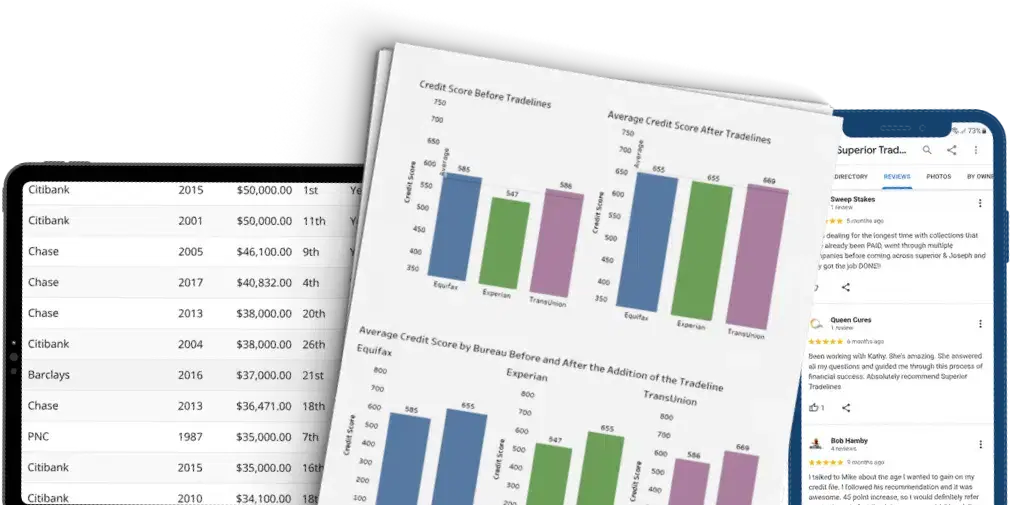
Seasoned tradelines have been open for a long time and show a positive payment history. They can boost your credit score by adding depth and stability to your credit profile.
These tradelines demonstrate a history of responsible credit use, which lenders favor. Opting for seasoned tradelines can be a strategic move for improving your credit score, especially if your credit history is short.
Responsible Tradeline Use
Using tradelines responsibly is crucial for maintaining a healthy credit score. It’s important to monitor your accounts regularly and ensure timely payments. Avoid overusing credit and keep your utilization low.
Educating yourself on tradeline use can prevent common pitfalls and set you up for long-term financial success. Remember, tradelines are tools that, when used wisely, can enhance your financial opportunities.
Frequently Asked Questions
What is a tradeline?
A tradeline is a record of your credit accounts, detailing your borrowing and repayment history. It includes information like account age, credit limit, and payment history, all of which impact your credit score.
How do tradelines show up on a credit report?
Tradelines appear on your credit report as individual records for each credit account. They provide detailed information on your credit activity, which lenders use to assess your creditworthiness.
What is the difference between primary and authorized user tradelines?
Primary tradelines are accounts where you are the main holder, directly affecting your credit score. Authorized user tradelines involve being added to another person’s account, allowing you to benefit from their credit history without full responsibility.


