Matias is a serial entrepreneur and CEO of many companies that help people. He owns Superior Tradelines, LLC, which is one of the oldest and most reliable tradeline companies in the country.
Connect with me online | Email me | Call me
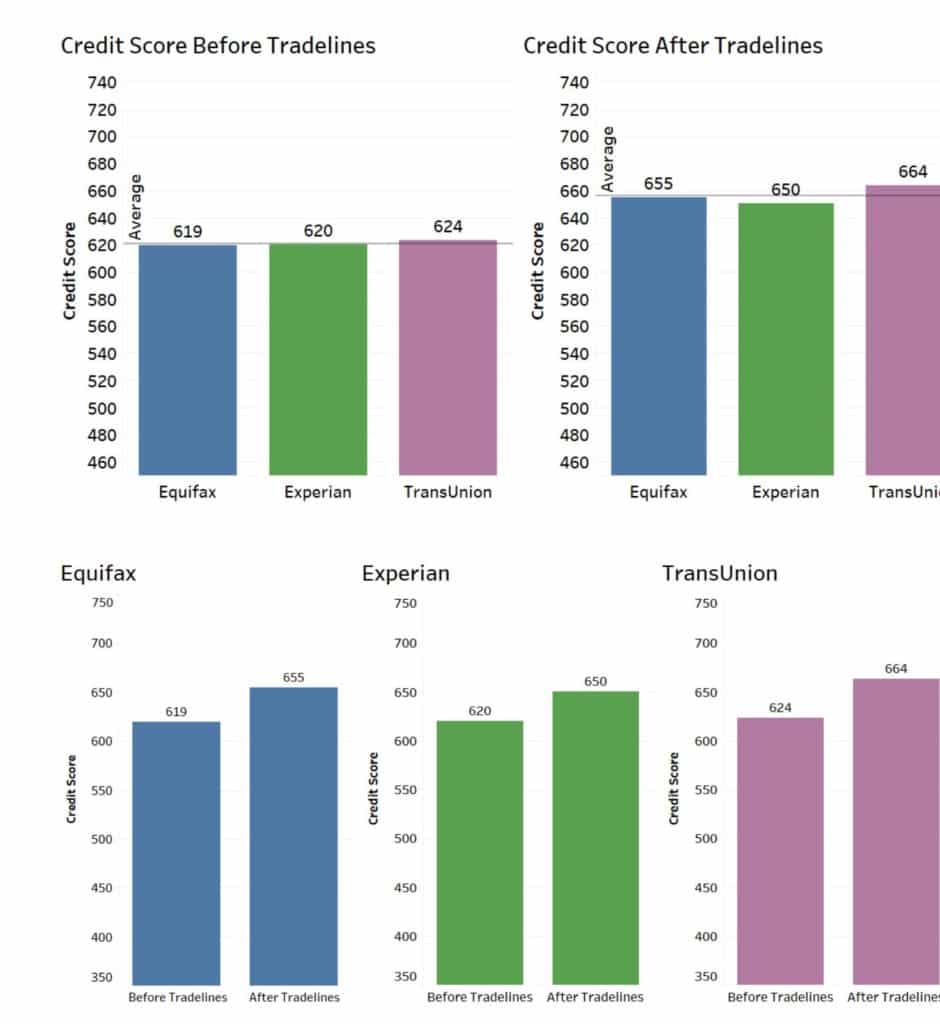
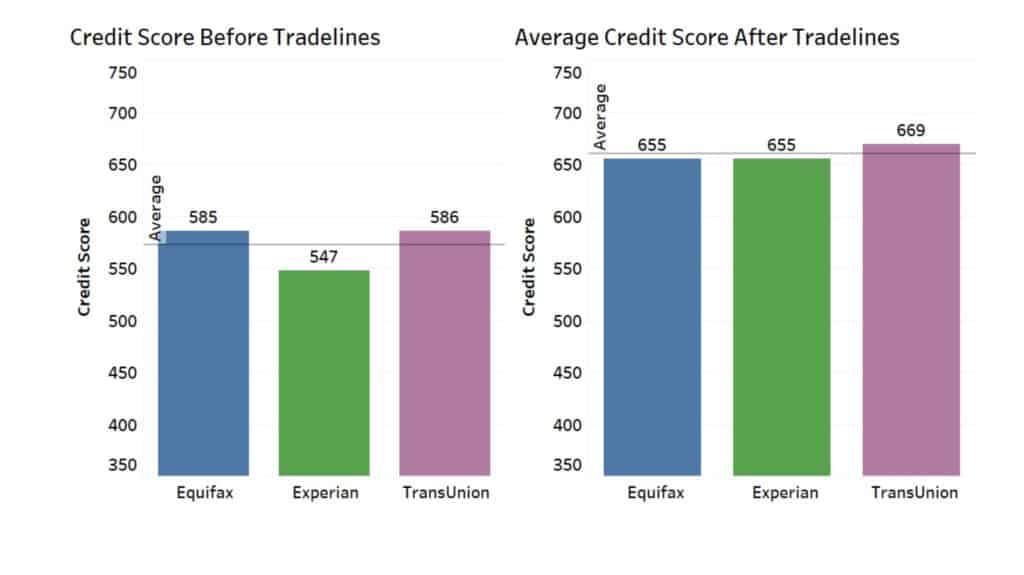
We studied the impact of tradelines on credit score change for participants who had a preexisting credit file. 809 participants were included who had a credit score before the addition of authorized user tradelines.
It was found that the average credit score change was 30 points for Experian, 36 points for Equifax, and 40 points for Transunion. The average change in credit score across all three bureaus increased 35 points to the credit score.
This average increase is minor compared to the average score increases for those with no credit file.
93.6% of the participants in the study started with some credit score. Thus, this is a more appropriate figure to apply to most situations.
Average increases explained.
There are many explanations why these clients saw significantly smaller increases in their scores.
First and foremost, the lowest FICO score is 350. If clients received any increase in score, they would see at least 350 points. This is an unrealistic expectation for anyone whose credit score is above 500, since the perfect FICO score is 850.
Additionally, the tradelines added to their reports were no longer the only factor determining the credit score. Instead, they were among many. Since each tradeline contributes to the credit score, having multiple accounts would lessen the impact of new tradelines.
Finally, it was impossible to guarantee that each account on the participant’s reports was in good standing. Only the authorized user tradelines added were guaranteed to be in good standing. Recent negative factors, like late payments or collections, can negate the benefit of adding a tradeline to a report.
The clients who had credit files prior to the tradeline were more likely to have negative factors on their reports. This could be why the average improvement in the credit score is limited here.
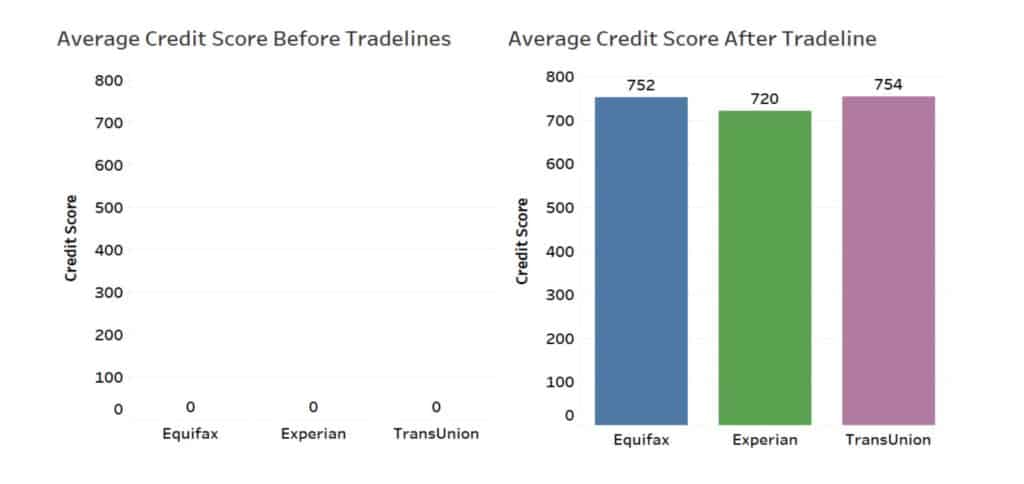
Thin or non-existent credit files typically cannot generate a credit score, so they were assigned zero value. Since the lowest FICO credit score possible is 300, any addition to the credit report would cause the score to rise hundreds of points.
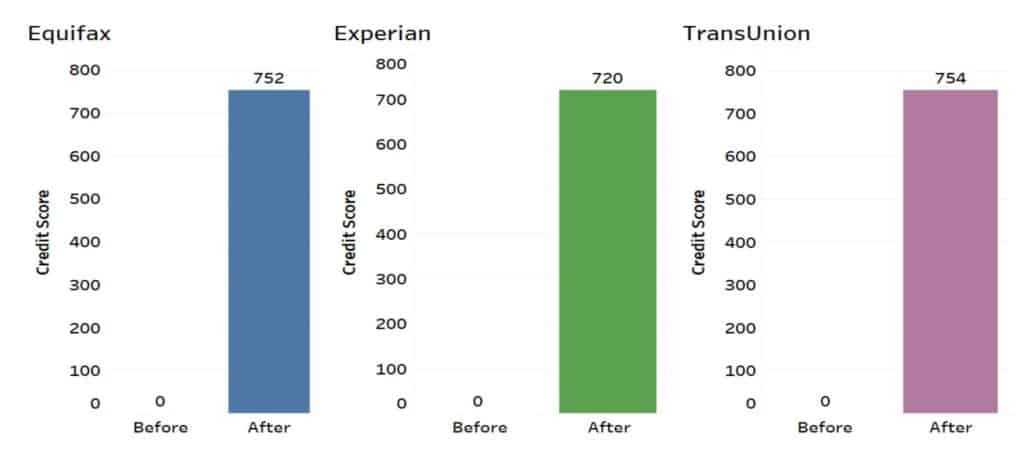
Fifty-one participants had no credit score before adding the tradelines, which accounted for 6.4% of the study participants.
Since this situation occurs frequently, we separated participants who had no starting credit from those with credit scores. The data was analyzed once the participants were split into these categories.
The addition of an authorized user tradeline to the credit report for these clients resulted in an average increase in the credit scores. The average increase in score for Experian was 720-points, for Equifax was 752-points, and for TransUnion was 754-points.
Beneficial tradelines for credit.
These results suggest that it can be highly beneficial for individuals with no credit score to be added as an authorized user tradeline. Individuals who had no starting credit score were intentionally separated from those who did have a credit score. This was because authorized user tradelines tend to impact those who have a small credit file significantly.
Given that there is little information on the report for the credit score formula to include, adding a tradeline in good standing can dramatically improve multiple factors that influence the credit score.
While there are fewer of these clients, there is a higher average score which inflated the results of Analysis 1. These findings are also in accordance with the results of the study by the Federal Reserve (1).
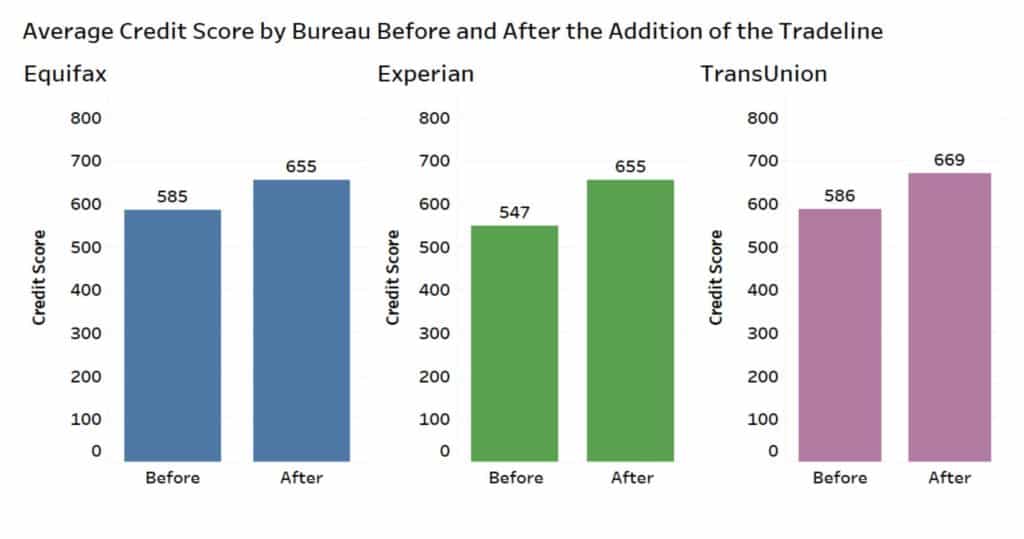
Data was collected from 860 participants. Then, the average credit score for each bureau was determined both before and after the tradeline was added.
By comparing the average scores before and after the addition of the tradeline, it was found that the tradelines had a positive impact on the scores. The average change in Experian score was 108-points. Equifax experienced an average increase of 70-points. Further, TransUnion experienced an average increase in 83-points.
Finally, the before and after credit scores from each bureau were averaged. It was found that the average credit score increase for each participant was 88 points.
A significant average increase in credit score implied that authorized user tradelines could drastically improve the authorized user’s credit score. However, many factors go into this general average, which is explained further below.
November 21, 2023 update:
Since we published this article, the confusion over tradelines has increased. We thought we'd update this article and republish it to bring it back into sight.
There ar...
If you’re looking to add trade lines to your credit report, it probably means you’re looking to improve your credit scores. And, you’re probably trying to do this for a very particular reason. For example, you’re probably trying to apply for some type of credit such as a credit card, a car loan, or a mortgage.
If this describes you, we are going to precisely answer the inquiry: how to add tradelines to credit reports.
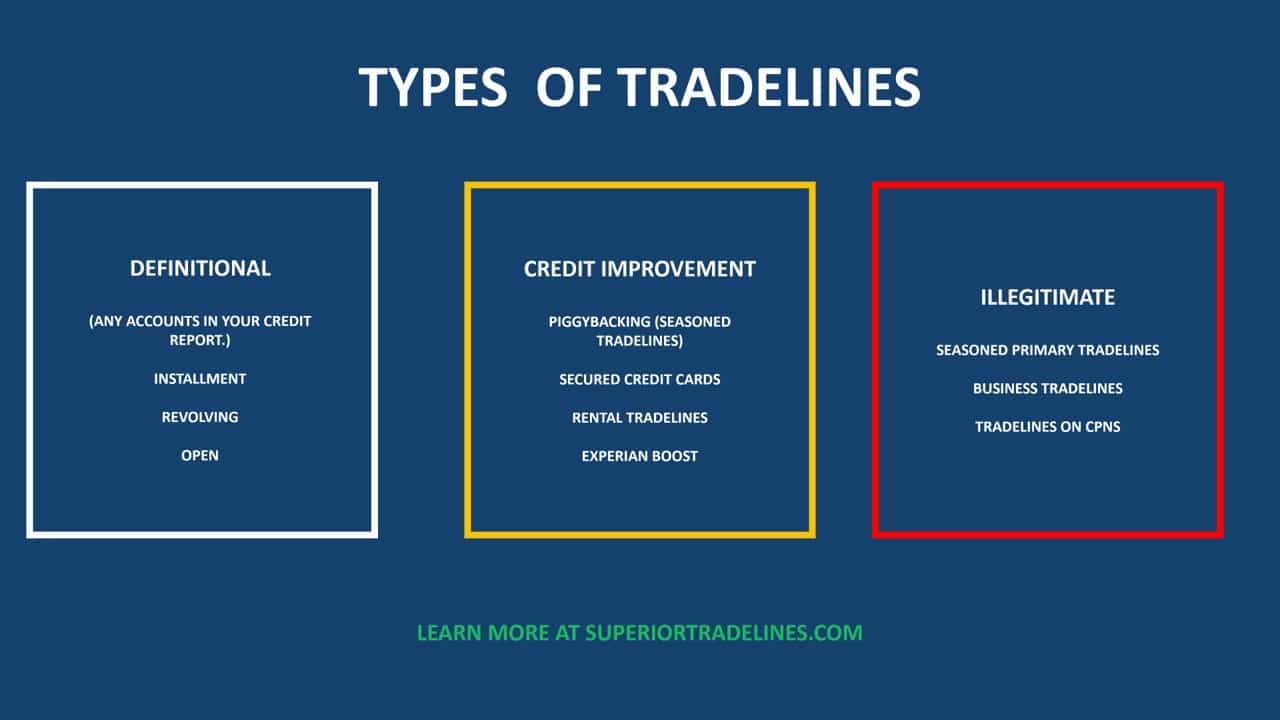
There are about four ways to add tradelines to credit reports.
There are essentially only a few ways to add trade lines to a credit report. First, you can become an authorized user to a pre-existing line of credit that will show up on your credit report. You can convert utility bills such as your rent or Netflix subscription into a trade line that reports to your credit report. You can also become a joint account holder on someone else’s account like a friend or family. And, of course, you can apply for a new line of credit. Let’s discuss each.
1. Become an authorized user to add tradelines to your credit report.
People have credit cards in their name, right now. And by law, those people can add others as authorized users to their credit card. When this happens, the history associated with that credit card appears on your credit report.
However, it can be tough to find someone willing to add you as an authorized user. You should first start with friends and family. You should explain that you’re not asking for actual use of the card but rather looking to have the history of their car report your credit report for credit score improvement purposes.
2. Convert utility bills to add tradelines to credit reports.
There’s a new wave of options to add tradelines to credit reports. For example, you can now convert utility bills such as rent and Netflix subscriptions to the credit reporting bureaus. This can be great for someone with a thin or blank credit file to get a jump start on your credit report.
We don’t necessarily recommend anyone in particular, but there are a lot of companies out there that do this such as Self, Identity IQ, and Experian Boost.
A quick Google search can show you a lot of options.
3. Become a joint account holder to add tradelines to credit report.
A less common way to add tradelines to a credit report is to become a joint account holder. Becoming a joint account holder is not as simple as adding someone as an authorized user. When you become a joint account holder, you’re effectively asking for an application to be approved to become an account holder along with the other primary account holder.
This is usually reserved for very close relationships, such as parents to children or spouse to spouse. This is much more sensitive than authorized users because the joint account holder has full rights and privileges as well as obligations on the account.
Despite all this, when you become an account holder as a joint account holder you’re effectively just an additional primary account holder. For that reason, the history associated with that account will show up on your report. And, if the history associated with that account is in good standing, it will positively affect your credit.
Here’s an example of Discover’s joint account holder application (which is similar to other banks).
4. Apply for credit to add tradelines to credit report.
Lastly, the most obvious way to add trade lines to a credit report is to apply for credit. Clearly, this is a cart-before-the-horse situation, because people who are looking to add tradelines to a credit report are usually looking to do so. After all, they weren’t approved when they applied for a line of credit. Even so, there are ways to increase your chances of getting approved for a line of credit. One of many of the examples is using Credit Karma.
Frequently Asked Questions about adding tradelines to credit reports:
Is it legal to add tradelines?
Whether tradelines are illegal is a fact-specific question (meaning, what are you doing specifically?). Of the four methods mentioned above, none of them are illegal. However, there are some shady players in the tradeline space that credit synthetic identities and fake tradelines. In those cases, you could be breaking the law. Stick to normal practices and you should be fine.
Does adding tradelines increase credit scores?
This depends. If you become a joint account holder, the balance carried can negatively impact your debt-to-credit ratio since, in that scenario, you would be obligated for the debt. In the case of applying for new credit, typically you see an initial dip in credit score and, after you make some payments on time, your scores go up. In the case of authorized users, it depends on the nature of the line; is it in good standing with no missed payments and a high limit together with a low balance? If so, then it will likely improve your credit score.
Do tradelines still work?
This question is typically referring to the practice of piggybacking credit. The quick answer is that tradelines still work, but you can read our longer answer, here.
What are the cons of using tradelines?
The primary con is that you could add the wrong tradeline and your scores could go down. Or, worse, you could work with an unqualified company and they could take your money without recourse. So, just make sure you stay informed on tradelines and make good decisions going forward.
How much do tradelines cost?
The prices to be added as an authorized user range quite widely, but ultimately, you can expect to pay many hundreds of dollars but under a thousand dollars per tradeline. You can always ask for discounts. Everything is a negotiation, they say. So, contact an expert and find out pricing for yourself.
Conclusion.
Even though credit is confusing and it always feels like an uphill battle, there are a lot of options for those looking to add trade lines to credit reports. We’re hopeful that the tips above are helpful. Whether you’re going to become an authorized user, a joint account holder, apply for credit in your name, or convert utility payments into trade lines, we have one thing of advice: take action.
Credit seems to stay stagnant or get worse when people don’t take action. For that reason, that is our advice: take action.
You have rights under the law and, unlike other companies, we tell you about them so you can exercise them. By creating an account on our website through any sign-up form or any other method, you expressly consent to Superior Tradelines, LLC, it’s employees, contractors, agents and assigns (hereinafter “our” or “we”) communicating with you, using any phone number, including a mobile or cell phone number, or email address that you have provided us using any current or future means of communication at our full discretion and transmitted by any available means. Technologies we may use to contact you include, but are not limited to, automatic telephone dialing equipment, artificial or pre-recorded voice messages, SMS text messages, or email, all of which may be transmitted by any available technology. YOU ACKNOWLEDGE THAT YOU MAY INCUR COSTS FROM YOUR SERVICE PROVIDER RELATED TO RECEIPT OF OUR COMMUNICATION AND YOU FURTHER CONSENT TO USE OF THESE MEANS OF COMMUNICATION EVEN IF YOU INCUR COSTS. You understand that you may revoke your consent to receive communication from us by visiting: https://members.superiortradelines.com/opt-out You also understand that it may take up to 48 hours before Superior Tradelines, LLC can acknowledge your revocation of consent.