
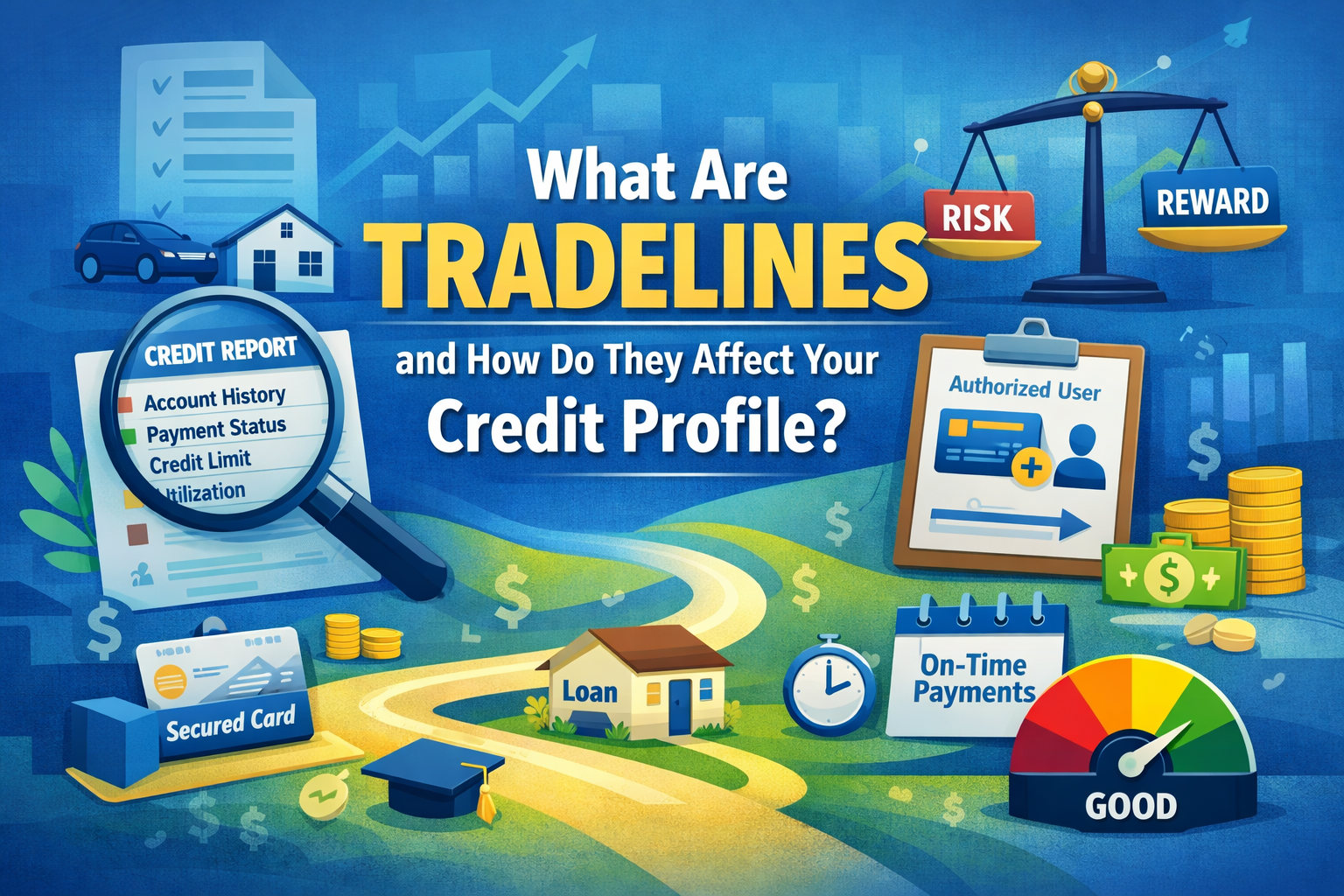
When people start learning about credit, the word tradeline often comes up — and just as often causes confusion.
A tradeline is not a product.
It’s not a shortcut.
And it’s not inherently good or bad.
Simply put, a tradeline is an account that appears on a credit report. Understanding how tradelines work — and how they’re viewed — can help people make more informed credit decisions before important financial moments arise.
This article explains what tradelines are, how authorized user tradelines work, the potential benefits and risks, and why education and timing matter more than speed.
Table of Contents
What Is a Tradeline?
A tradeline is a record of a credit account listed on a credit report.
Tradelines can include:
• Credit cards
• Auto loans
• Mortgages
• Personal loans
• Other accounts reported to credit bureaus
Each tradeline typically shows information such as:
• Account type and status
• Date the account was opened
• Credit limit or original balance
• Current balance
• Payment history
• Whether the account is open or closed
Lenders and credit scoring models use this information to help evaluate creditworthiness.
Why Tradelines Matter for Credit
Tradelines are important because they contribute to key credit factors, including:
Payment History
On-time payments help establish positive credit behavior, while late payments can negatively affect a profile.
Credit Utilization
For revolving accounts, balances compared to credit limits influence utilization, which is a major scoring factor.
Length of Credit History
The age of accounts — including the oldest account and average account age — impacts how established a credit profile appears.
Credit Mix
Having different types of accounts can demonstrate the ability to manage multiple forms of credit.
Together, these elements help lenders assess risk when someone applies for financing.
What Are Authorized User Tradelines?
An authorized user tradeline occurs when someone is added as an authorized user to an existing credit card account.
In traditional situations, authorized users are often family members — for example, a parent adding a child to help them build credit.
When added as an authorized user:
• The account may appear on the authorized user’s credit report
• The account’s payment history may be reflected
• The primary account holder remains responsible for payments
Authorized user tradelines can influence a credit profile, but results vary depending on the account and the individual’s existing credit history.
Buying Tradelines: How It’s Commonly Described
Some companies offer services where individuals pay to be added as an authorized user to an existing account they don’t personally know. This is often referred to as buying or renting tradelines.
While this practice is not illegal, it is considered a gray area within the credit industry and is often viewed cautiously by lenders and credit bureaus.
Key points to understand:
• Authorized user tradelines may appear on a credit report
• Not all scoring models weigh them equally
• Impact is not guaranteed
• Accounts can be temporary
• Personal information must be shared, which carries risk
Because of this, tradelines should never be treated as a guaranteed solution or replacement for responsible credit building.
Tradelines and Thin Credit Files
A thin credit file refers to a credit profile with limited account history.
For some individuals, authorized user tradelines may:
• Add visible account history
• Increase average account age
• Improve utilization metrics
However, thin credit profiles are highly individual. What helps one person may have little impact for another.
Tradelines vs. Building Credit Directly
Building credit directly involves opening and managing accounts in your own name, such as:
• Secured credit cards
• Credit builder loans
• Auto loans
• Mortgages
• Vendor or business accounts
This approach:
• Takes more time
• Requires consistent payment behavior
• Builds long-term credit strength
Authorized user tradelines are not a replacement for this process, but may be considered a supplemental educational topic for those preparing for major financial steps.
Why Education Matters More Than Speed
Many people only learn about tradelines when they’re already applying for financing.
By that point, options may be limited.
Understanding how tradelines work before applying for a home, car, or business financing allows people to:
• Make informed decisions
• Avoid unrealistic expectations
• Reduce risk
• Prepare strategically
Credit profiles are not one-size-fits-all.
Are Tradelines Right for Everyone?
No.
Every credit profile is different, and tradelines do not work the same way for everyone. Outcomes depend on:
• Existing credit history
• Types of accounts already on file
• Utilization and balances
• Timing relative to applications
• Lender evaluation criteria
This is why education and transparency are essential.
Final Thoughts
Tradelines are not a shortcut, and they are not a guarantee.
They are credit accounts listed on a credit report, and in some cases, authorized user tradelines may contribute to how a credit profile appears when used thoughtfully and with proper understanding.
Before making any decisions, it’s important to learn how tradelines work, understand potential risks, and consider how they fit into a broader credit strategy.
Education first.
Clarity before action.
Because informed decisions lead to better outcomes.

Matias is a serial entrepreneur and CEO of many companies that help people. He owns Superior Tradelines, LLC, which is one of the oldest and most reliable tradeline companies in the country.

